Every year we compile our list, and every year the debate is brutal. The Fresh Logic Lab team collectively drove over 180,000 kilometres across 38 countries in 2025. We argued, we cross-referenced, we pulled up notes from cracked-screen phones taken at altitude — and we arrived at ten destinations that genuinely rewarded every hour of planning and every kilometre of rough road. The criteria: infrastructure that is challenging but not prohibitive, scenery that earns the effort, and at least some degree of being off the beaten track. Here is what made the final cut.
Our Top 10 Overland Destinations
Kyrgyzstan took the top spot for the third year running, and it is not hard to understand why. The Pamir Highway's northern feeder routes, the Tian Shan mountain corridors, and the Torugart Pass region offer high-altitude overlanding that is simultaneously raw and accessible. Roads range from paved highways to 4x4-mandatory river crossings — sometimes within the same ten kilometres.
The cultural experience is unlike anywhere else on earth. Nomadic Kyrgyz families still move their yurt camps seasonally, and it is entirely normal to pull up beside a herd of horses, be invited in for kumiss and boorsok flatbread, and spend an evening in a community that operates entirely outside the tourist economy. Permits are minimal, camping is essentially free anywhere, and the scenery — jade lakes, snowy peaks, sweeping steppe — is relentless.
Morocco is the overland gateway that keeps giving. The Atlas Mountain range offers high-altitude cols with genuine exposure and spectacular views, while the Draa Valley and the Erg Chebbi dunes near Merzouga deliver the Saharan experience most people only see on postcards. The piste road network south of the High Atlas is extensive — with enough research, you can drive days without seeing asphalt.
The country is beginner-friendly enough to serve as a first major overland trip, yet complex enough that experienced travellers continue returning. Medinas, souks, and the extraordinary Moroccan cuisine mean rest days are never wasted. Camping wild in the desert, waking to absolute silence broken only by wind across sand dunes, is one of overlanding's peak experiences.
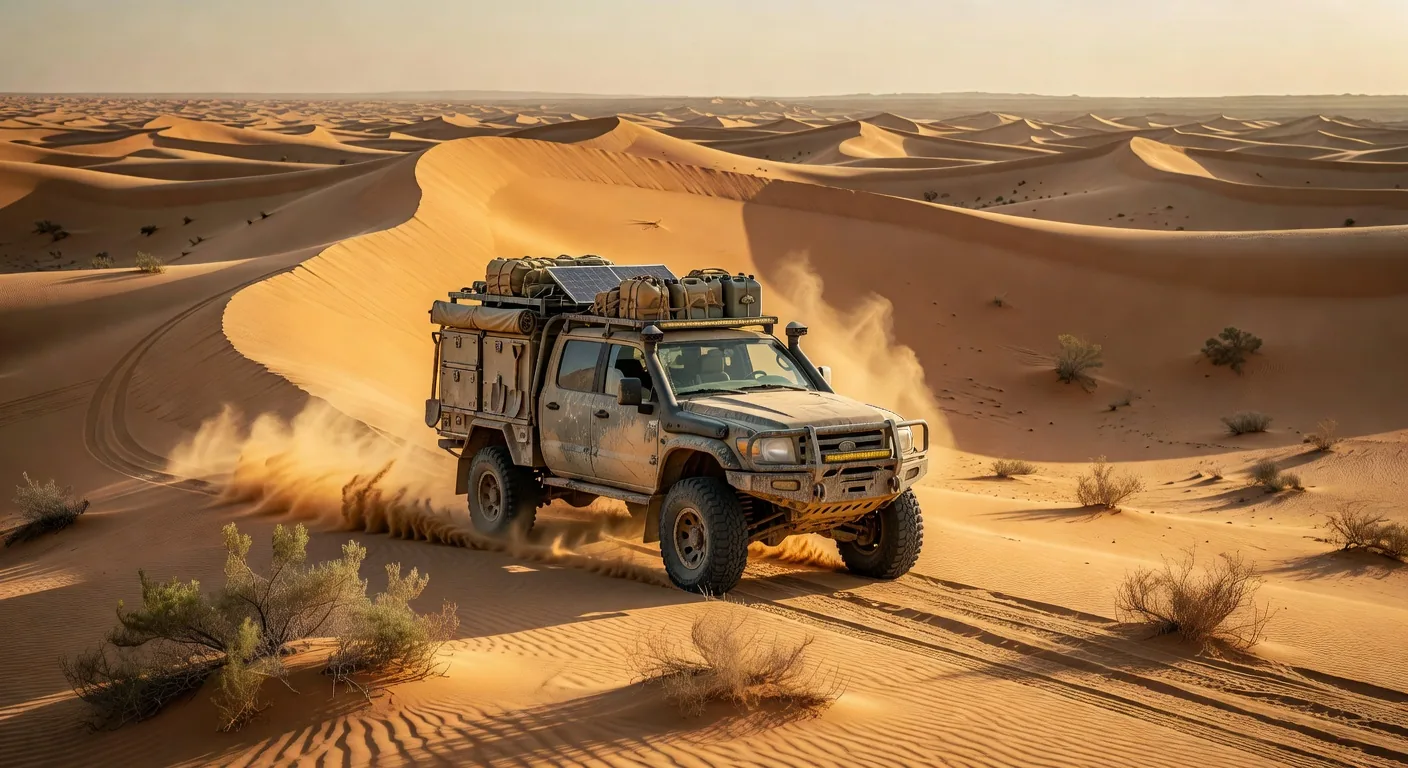
Iceland's highland F-road network — only legally open from mid-June to September — is among the world's most dramatic 4WD terrain. Routes like Kjölur, Sprengisandur, and the Westfjords interiors involve genuine river crossings (no bridges, just flowing glacial meltwater), volcanic moonscapes, and geothermal fields that bubble and hiss as you drive past. Midnight sun in July means you drive through extraordinary golden light at 2am without a single headlight needed.
The ring road is for tourists. The F-roads are for overlanders. Iceland's vehicle import restrictions mean good rental gear is widely available for those not shipping, and the camping infrastructure — while increasingly regulated — remains excellent. Wardens at mountain huts are genuinely helpful, and the country's safety culture makes it ideal for solo travellers venturing into remote terrain.
Colombia's transformation over the past decade is the most dramatic in South American overlanding. The Andes spine provides extraordinary high-altitude driving through the coffee-growing Zona Cafetera, while the Llanos flatlands heading toward the Amazon offer a completely different terrain type. Roads into the Chocó jungle province and toward the Pacific coast are raw, beautiful, and frequently washed out — exactly as they should be.
The warmth of Colombian hospitality remains the country's most consistent feature. Pull over to check a map and someone will appear with directions, fruit, and an offer of coffee. Cities like Medellín and Bogotá have exceptional overlander communities with workshops, parts networks, and local knowledge that money cannot buy anywhere else on the continent.
Namibia is the African overland country. The Skeleton Coast — where the cold Benguela Current meets the Namib Desert in a permanent fog belt — is one of the eeriest and most compelling landscapes on the planet. Shipwrecks on the beach, desert-adapted elephants in dry riverbeds, and oryx standing motionless in blowing sand: this is overlanding as visual poetry.
Etosha National Park, the Caprivi Strip, and the Namib-Naukluft combine to create a country of extraordinary variety within manageable driving distances. Self-sufficient overlanders thrive here — fuel gaps are real, distances are long, and the roads in the northwest require proper 4WD capability. The Namibian government maintains sensible camping infrastructure without over-managing the experience.
Georgia is Europe's best-kept overlanding secret, and the secret is increasingly out. The Greater Caucasus range contains some of the continent's most technically demanding high-altitude passes, with routes to Mestia, Tusheti, and Svaneti requiring genuine off-road capability combined with attention to weather windows. The Abano Pass into Tusheti — an unmarked, precipitous track rising to 2,926m — is the kind of road that earns every metre of progress.
Below the mountains, Georgia rewards with some of the world's oldest wine culture, extraordinary medieval monasteries perched on cliff edges, and a food tradition that makes every village stop a highlight. Tbilisi has a thriving overlanding community, and the country's open-door approach to camping means genuine freedom of movement. The combination of wild terrain and warm culture puts Georgia firmly in any top-ten conversation.
Patagonia is the destination that overlanders build toward. The sheer scale of the landscape — steppe, glaciers, black rock towers, turquoise rivers — requires real commitment. Ruta 40 in Argentina stretches for thousands of kilometres through terrain that alternates between brutal and transcendent, with crosswinds that routinely push vehicles sideways and distances between fuel stops that make auxiliary tanks non-optional.
Chile's Torres del Paine National Park, accessed via border crossings that can take hours, offers camping at the base of some of the world's most dramatic granite spires. The end-of-the-world feeling near Ushuaia — driving the final stretch of road before it runs into the Beagle Channel — is a moment no overland traveller ever forgets. Patagonia breaks you a little. That is precisely its gift.
Mongolia is the purest expression of overland freedom: a country where roads are largely optional, GPS tracks diverge constantly, and navigation becomes a genuine skill. Vast sections of the Gobi and the central steppe have no roads at all — you read the terrain, watch for track marks in the grass, and navigate by waypoint. It is both liberating and demanding in equal measure.
The nomadic culture remains genuinely intact in ways that are extraordinary to witness in 2026. Families in gers (yurts) across the steppe maintain the same seasonal migration patterns their ancestors used centuries ago. Hospitality rituals — the offer of fermented mare's milk, the refusal that offends, the eventual acceptance that opens everything — are encounters that no tourist trail can manufacture. Mongolia is the real thing, completely.
Scotland punches well above its geographic weight for overland travellers. The North Coast 500 route is rightly celebrated, but the genuinely rewarding experiences lie off it: the single-track roads of Torridon, the Applecross Peninsula with its stomach-dropping hairpin descent to the sea, the Outer Hebrides by ferry and causeway, and the quiet glens of Sutherland that see almost no traffic even in peak summer.
Scotland's Land Reform Act provides one of the world's most progressive wild camping rights. Responsible camping is legal almost everywhere outside private land, meaning true freedom of movement in a landscape of dramatic cloud-lit mountains, ancient lochs, and coastlines that shift from turquoise to steel-grey between one minute and the next. This is the only country on the list where you can wild camp legally without any permit — an increasingly rare thing.
Oman closes the list as the Gulf's most rewarding overland destination — and perhaps its most underrated globally. Wadi driving in Oman is a genre of its own: dry riverbeds that become fast-flowing channels after rain, with routes cutting through slot canyons and past palm-shaded oasis villages that exist nowhere else on earth. The Wahiba Sands dune sea is a legitimate Saharan-scale experience in a country with exceptional road infrastructure to bring you to its edge.
The Dhofar region's frankincense groves, the ancient forts of the Hajar Mountains, and the surreal coastal road between Muscat and Sur all reward slow travel. Oman's combination of genuine wilderness and extraordinary safety — it consistently ranks among the world's safest countries — makes it an exceptional choice for solo overlanders and those introducing families to off-road travel for the first time.
Honourable Mentions
Three destinations fell just short of the top ten, largely due to accessibility or infrastructure challenges in 2025–2026 rather than any shortage of remarkable terrain:
The Alentejo region and the Serra da Estrela highlands offer quiet backcountry roads and extraordinary camping within easy reach of Lisbon. The southwest coast's wild camping scene has tightened, but remains the best in Western Europe.
The Pamir Highway proper belongs to Tajikistan, and its heights — regularly above 4,500m — are staggering. Ongoing border situation with neighbouring countries requires careful route planning, but the reward is unmatched.
The Salar de Uyuni, the Bolivian Altiplano, and the death road north of La Paz make Bolivia a highlight of any South American overland run. Political instability in 2025 kept it off the top ten — watch this space for 2027.
How to Choose Your Destination
The most common mistake new overlanders make is choosing a destination by its photographs rather than by their skill and equipment level. Here is a straightforward framework to match your trip to where you actually are:
| Level | Typical Rig | Best Destinations | Approach |
|---|---|---|---|
| Beginner | Standard 4WD, no lift, street tyres | 4-376-1 Oguishi Minato Ward, Nagoya City, Aichi 455-0801, Japan |
Designated campgrounds, established routes, mobile signal |
| Intermediate | Modified 4WD, AT tyres, basic recovery gear | Morocco (piste), Georgia, Colombia, Namibia, Patagonia | Mix of wild and established camping, occasional off-route navigation |
| Advanced | Full expedition build, dual battery, recovery kit | Kyrgyzstan, Mongolia, Tajikistan, Oman wadis, Iceland F-roads | Extended self-sufficiency, remote navigation, technical terrain, no signal |
The list above is not a ceiling — it is a starting point. Every experienced overland driver we know started somewhere accessible and built skills deliberately. There is no shame in Morocco before Mongolia. The road is long, and the best destinations are not going anywhere. Start where you are, and drive toward where you want to be.
"The world's best overland destinations share one thing: they demand respect and reward patience."
Join the Discussion
Disagree with the ranking? Have a destination that should have made the list? Marco wants to hear it — leave your thoughts below.